
For clubs and court networks
Operate the club.
Grow the community.
Lunda Padel is a club platform and a player community in one system: courts, bookings, pricing, customers, coaches, events and reporting — connected to the players and organizers already looking for court time.
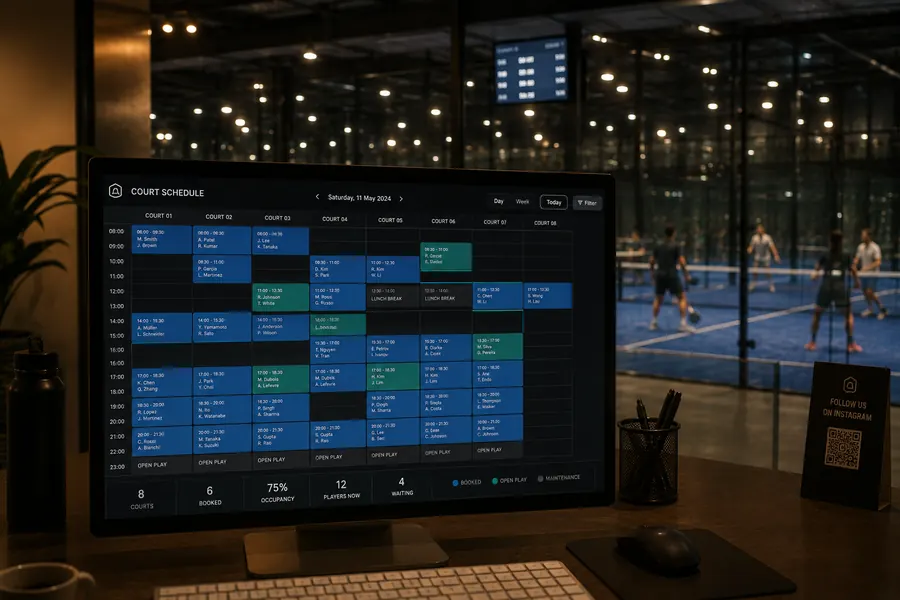
A full operating day across every court: private bookings, open matches, a coaching block and a tournament, with operational statuses. Enough density to look like real work, clean enough to read. This is the hero, not an analytics dashboard.
MOTION — six seconds of one real day: bookings appear across the timeline in the order they came in, and the evening block fills last. It should feel like watching a shop get busy.
Schedule & bookings
Every court, every channel, one timeline.
Pricing & customers
Tariffs, modifiers and client records under your control.
Staff, coaches & events
Training, club events and roles coordinated in the same place.
Performance
Utilisation, revenue categories, retention, coach activity.
Player demand
Connection to the players and organizers in the ecosystem.
Platform overview
Four connected parts.
Clubs usually run a booking tool, a spreadsheet and a separate marketing channel. These are the same four components, connected.
Player app
Where players find your courts, games, training and events — and where your availability becomes demand.
Booking widget
Booking from your own website and channels, feeding the same calendar.
Club platform
Daily operations: calendar, pricing, customers, staff, coaches, events, communication.
Reporting
What actually happened — utilisation, revenue categories, retention, coach activity.
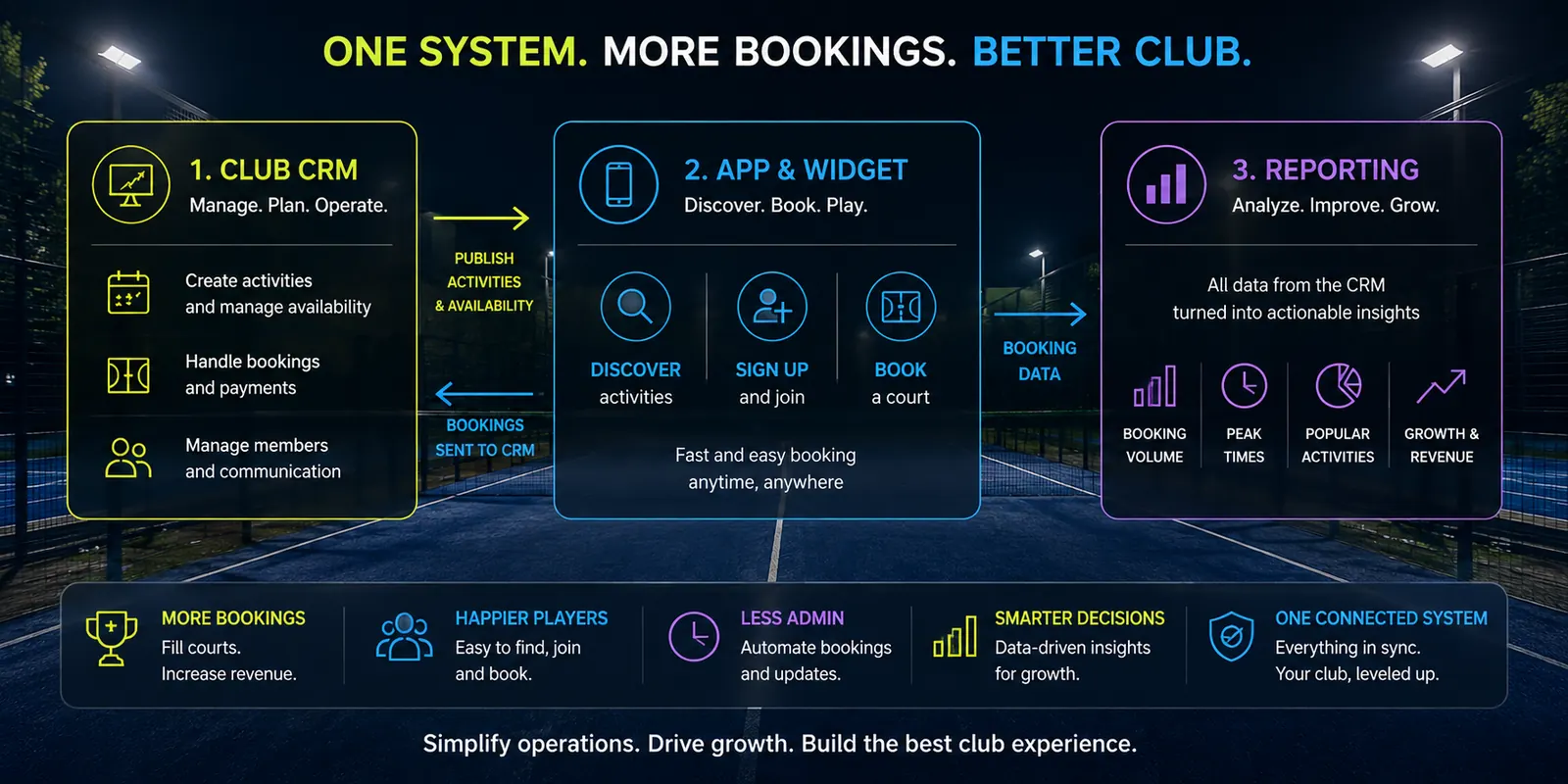
Player App ↔ Booking Widget ↔ Club Platform ↔ Reporting, showing which direction data moves between them. Plain text equivalent required for accessibility and for the no-JavaScript fallback.
MOTION — draw the connections one at a time, in the order a club would actually meet them: calendar first, then app, then widget, then reporting.
Do not claim real-time synchronisation between components until verified (spec 19 §4).
Schedule & bookings
The day, on one screen.
Court calendar with every booking type visible at once, so staff are not reconciling three systems at the desk.
- All courts on one timeline, by day or by period
- Private bookings, open matches, tournaments and coaching side by side
- Booking rules, durations and blocking for maintenance or internal use
- Bookings from the app, the widget and the front desk in the same place
- Operational statuses staff can act on during a shift
Commercial control
Price the way the week actually behaves.
Peak Tuesday evenings and empty Wednesday mornings are not the same product. The pricing model should say so.
- Time-based tariffs with peak and off-peak logic
- Holidays, seasons and special conditions
- Modifiers, vouchers and settlement handling
- Payment provider relationships stay yours — their fees are theirs, not ours
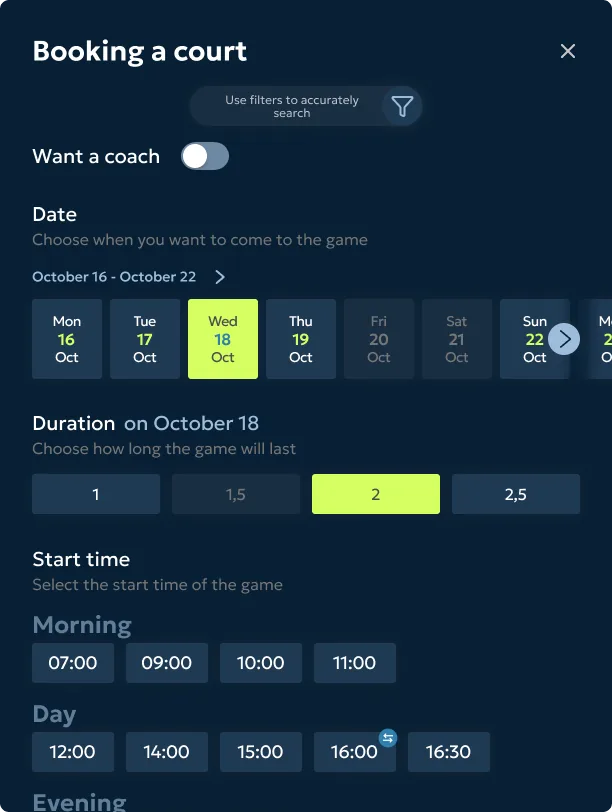
A single booking opened from the calendar: customer, court, duration, price applied, payment status, history.
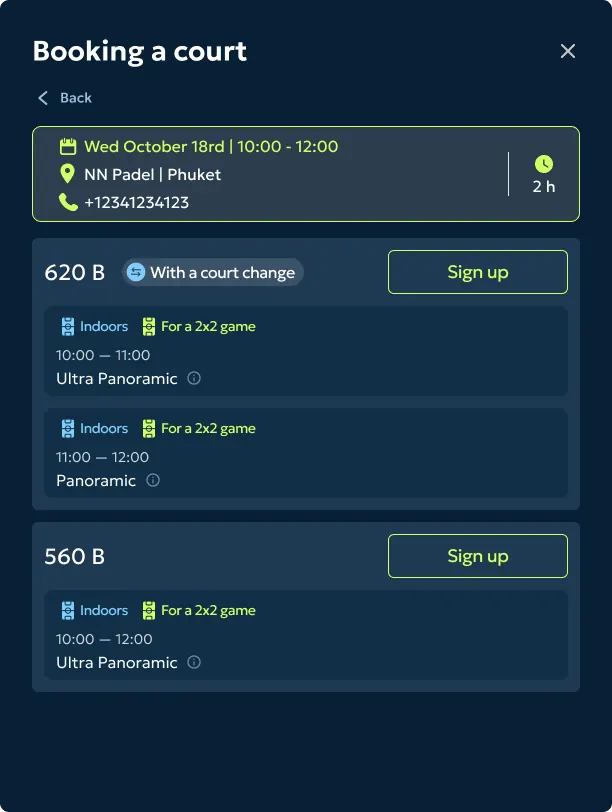
Tariff setup with a peak/off-peak rule and a holiday exception visible.
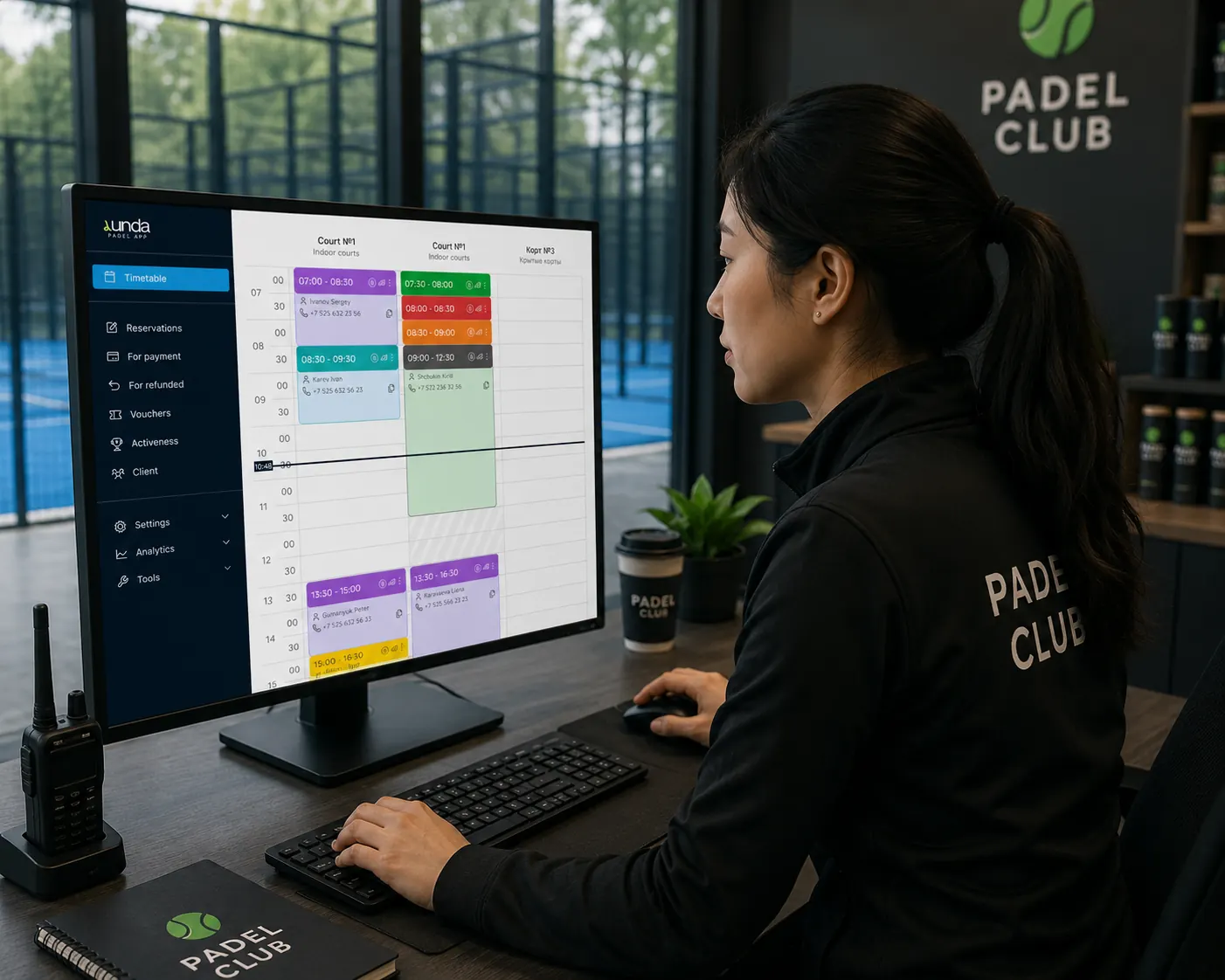
Front-desk staff working with the platform during a busy changeover. Real club, real screen.
IDEA — shoot over the shoulder at the desk during a changeover, with the courts visible through the window behind the screen. Two things in one frame: the software and what it is for.
Customers, staff & activities
The people side of the operation.
Client records, employees and roles, games, training sessions, coaches and club events — kept where the bookings are, so the history is in one place when a customer calls.
Clients
Records, booking history and communication where supported.
Employees
Staff accounts and role-based access to the parts of the platform they need.
Coaches & training
Coach schedules, training sessions and participant management. Coaches get their own tools too — see the coaches page.
Club events
Internal events and leagues alongside tournaments run by organizers.
Use the term “CRM” only with a precise explanation of scope (spec 19 §6). Preferred wording on the page: clients and communication.
Reporting
Reports that lead to a decision.
Not “advanced analytics” — a defined set of reports, each answering a question a club manager already asks on Monday morning.
Utilisation by court and time band
Which hours are worth promoting and which are worth repricing.
Revenue by category
Court hire, training, events and other lines separated.
Customer retention
Who is coming back, who stopped, and after how long.
Coach activity
Sessions delivered, participants and load per coach.
Location comparison
For networks, side by side across sites where supported.
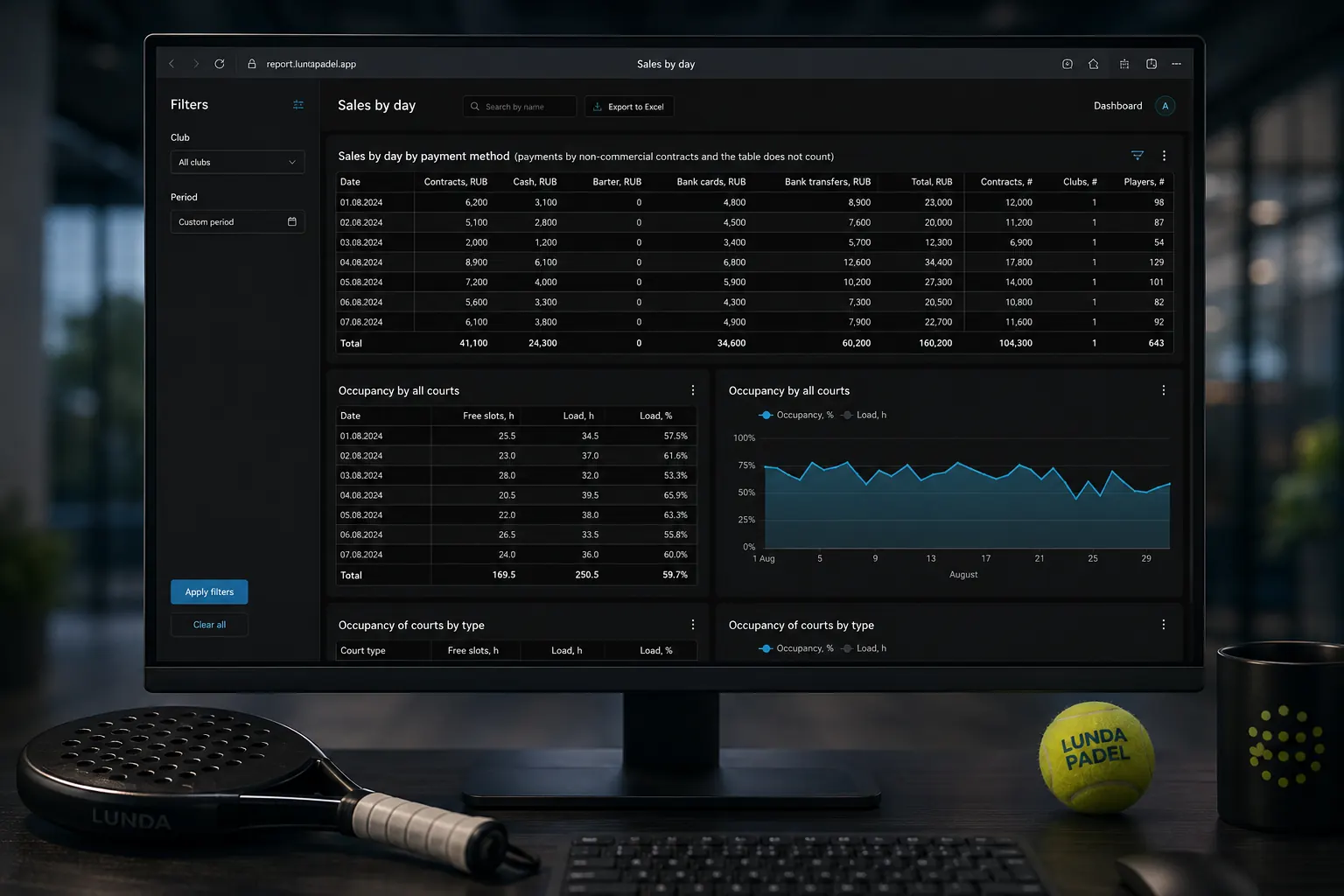
Real report screen with a visible weak time band and the action it implies. Appears in the page only after the calendar has been shown — operations first, analytics second.
MOTION — the weak time band is already highlighted when the chart draws in. The insight arrives before the numbers finish animating.
Integrations
What connects, and what depends on your market.
Integration promises are where club software usually overstates itself. These three groups stay separate on this page.
Confirmed
Only capabilities available in every supported market appear here.
Market or provider dependent
Payment processing and messaging services depend on the providers operating in your country. Availability is checked during onboarding.
Possible via API
Further connections may be possible through the API. Discussed case by case — no vendor is named until it is confirmed.
Demand
Your courts, in front of people looking for a game.
The club platform, the organizer platform and the player app are one ecosystem. So everything you publish can travel: a free slot becomes an open game, a quiet hour becomes a tournament, and a first visit becomes a name in your customer list.
Courts become visible
Availability is published to players in the app, in the cities where the ecosystem is live.
Organizers bring events
Tournament organizers are looking for courts. Your quieter bands are exactly what they need.
Players bring players
Open games fill the places a group of two or three could not fill on their own.
Activity compounds
A weekly event that works turns into a standing booking and a group that keeps coming back.
Wording stays conditional — “can”, “may”, “in markets where the ecosystem is live”. No guaranteed revenue or occupancy claims (spec 19 §9).
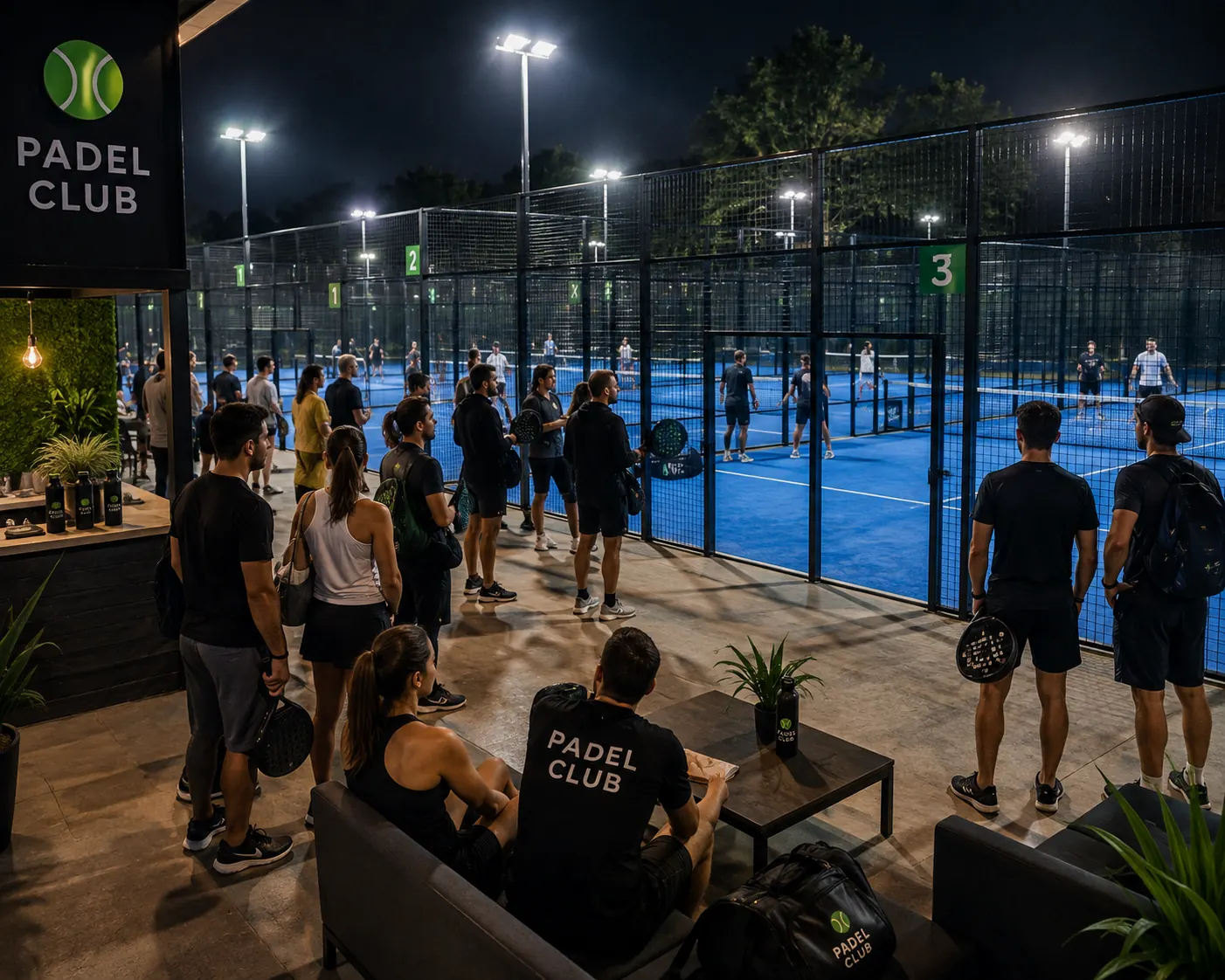
Same club, two moments — a quiet mid-morning court, and the same court during a full evening session with a group waiting to go on. The commercial argument of this page, made without a chart.
MOTION — lock the camera and shoot the same court at 10:00 and at 19:30. Cross-fade on scroll. No chart needed — the gap is the whole argument.
Getting started
Send the form. We take it from there.
You do not need a project plan or a technical team. Tell us about the club and we do the rest — courts, prices, services, integrations and, if you are moving from another system, the transfer. Most clubs are running within a few days.
Send the form
Name, how to reach you, where the club is and a couple of lines about it. That is enough to start.
We configure the club for you
Courts, tariffs, services and staff accounts, plus the payment and messaging providers that work in your country. Migration from your current system included.
Go live, with us alongside
A short walkthrough for the front desk, then we stay close through the first week.
“Within a few days” is a commitment, not a description. It needs sign-off from operations before publication (spec 19 §10 marks timing as a placeholder). Until then, publish the steps without the timing claim.
Trust & governance
The questions a club owner asks second.
Your customer data
Your club's customer data belongs to your club.
Export and deletion
You can export your data and request deletion.
Support model
No SLA is stated until one is approved.
External charges
Payment processing and messaging are charged by those providers. Lunda Padel does not add a margin.
Product maturity
The screens on this page are the product in use, not a concept. Proof appears in the section below once approved.
Legal
Privacy Policy, Licensing and Cookies set out the full conditions of use.
Unconfirmed legal statements stay as placeholders and block launch of the relevant copy — they must not be softened into vague reassurance.
Proof
Clubs already operating on the platform.
Quote, name, role, club, market, permission status.
Approved marks only, with usage rights documented.
FAQ
Club questions.
What exactly is free?
Core access to the club platform: calendar, bookings, pricing, clients, staff, coaches, events and reporting. There is no Lunda Padel subscription and no Lunda Padel commission on your bookings.
How long does it take to get started?
Send the form and we configure the club for you — usually a few days. We do the setup and the integrations, and we handle migration from your current system.
Which payment providers can we use?
It depends on your market. We check which providers are available in your country as part of setting the club up, and their processing fees are set by them.
Who owns our customer data?
Your club's customer data belongs to your club. Export and deletion are available.
Can we manage several locations?
Networks can manage multiple locations and compare them in reporting where supported. Tell us the setup in the form and we confirm the scope.
What support do we get?
We configure the club and walk your team through it, then support you continuously.
Is Lunda Padel available in our country?
Player demand in a new market builds gradually, so the operational value comes first and the demand connection grows as players and organizers join.
Talk to us
Add club for free.
Tell us how your club runs today. We come back with what the platform covers for you, what depends on your market, and then we set it all up.

Named person responsible for club onboarding, with photo, role and market. Puts a face on “we take it from there”.
Avoid “Start free”, “Book a demo” or “Start free trial” unless the matching workflow actually exists (spec 05.2, 05.7).